
Episodes

170
Dec. 5, 2018
170 Toni Morrison
TONI MORRISON (b. 1931) is one of the most successful and admired authors in the history of American literature. Her novels include The Bluest Eye (1970), Sula (1973), Song of Solomon (1977) and Beloved (1987), which is widely considered to be her masterpiece. After successful careers in both academia and publishing during the 1960s and '70s, Morrison's critical and commercial success enabled her to devote more time to her writing. In 1993, the Nobel Committee awarded the Nobel Prize for Literat...

169
Nov. 28, 2018
169 Dostoevsky
FYODOR DOSTOEVSKY (1821-1881) was, in the estimation of James Joyce, “the man more than any other who has created modern prose.” “Outside Shakespeare,” Virginia Woolf wrote, “there is no more exciting reading.” His influence is as impossible to understand as it is to overstate: he is widely credited as the forerunner of modern psychology, existentialist philosophy, the detective novel, and the prison memoir - and is, by any measure, one of the pinnacles of Russian literature. In this episode of ...

168
Nov. 21, 2018
168 Jhumpa Lahiri ("The Third and Final Continent")
What was it like to relocate from India to London to America in the early 1970s? And how can a daughter hope to recapture the experience of her father and convey it in fiction? In today's episode of the History of Literature, Jacke and Mike look at a contemporary classic story, Jhumpa Lahiri's "The Third and Final Continent." Along the way, they discuss the tropes of immigrant fiction, the pros and cons of epiphany stories, and whether a story is a "city" or "an old friend." (Yes, that's another...

167
Nov. 7, 2018
167 F Scott Fitzgerald
What happens when the party is over? Can you ever truly escape your past? Jacke and Mike take a look at F. Scott Fitzgerald's classic 1931 story of guilt and melancholy, "Babylon Revisited." F. SCOTT FITZGERALD (1896-1940) was the quintessential Jazz Age writer. While he's known today primarily as the author of the near-perfect novel The Great Gatsby, in his lifetime he was far more famous for his short stories, which millions of readers encountered through big-circulation magazines like The ...
166
Oct. 31, 2018
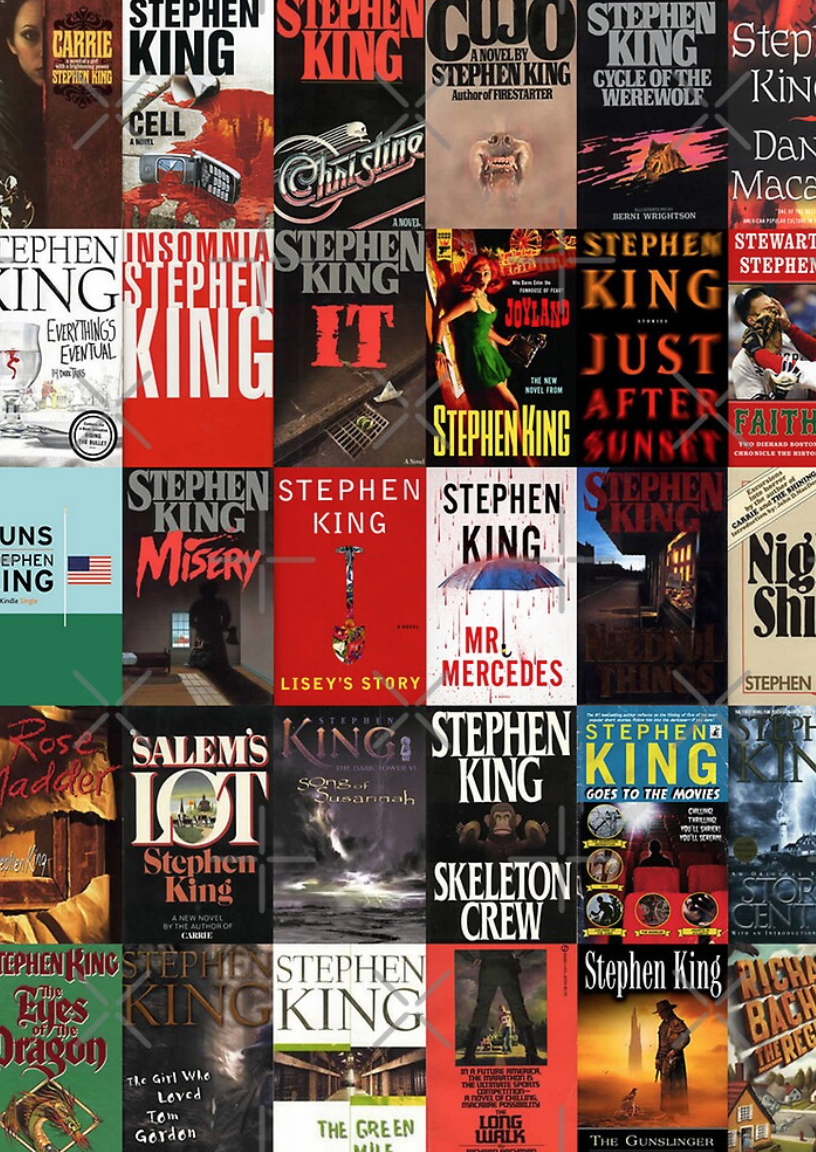
166 Stephen King (with the Sisters of Slaughter)
STEPHEN KING (1947- ) was born in the northern state of Maine, where he has lived most of his life. For more than forty years, he has been the world's leading practitioner of scary fiction. He’s also won numerous awards, including the National Book Foundation’s Medal for Distinguished Contribution to American Letters and the National Medal of Arts from the U.S. National Medal of Arts. His books have sold more than 350 million copies. MICHELLE GARZA and MELISSA LASON (aka the SISTERS OF SLAUGH...

165
Oct. 24, 2018
165 Ezra Pound
EZRA POUND (1885-1972) was born in a small mining town in Idaho and died in Venice, Italy. In his eighty-seven years, he changed the face of American poetry. A restless, tireless advocate for his artistic views and the authors who shared them, he also led an extremely eventful life, clamoring for change, devolving into madness, attacking his own country and living, for a while, as a prisoner of the United States Army, who kept him in an outdoor cage. His impact on American literature is as hard ...

164
Oct. 17, 2018
164 Karl Marx
Karl Marx (1818-1883) turned his early interest in literature and philosophy into a lifelong study of the socioeconomic forces unleashed by the rise of capitalism. His works The Communist Manifesto and Das Kapital, among others, influenced the course of the twentieth century like few others. But who was Karl Marx? How did his ideas become so widespread? And how did his thinking and writing impact literature? We'll talk about Karl Marx and Marxist Literary Theory with Mike Palindrome, the Preside...

163
Oct. 10, 2018
163 Gabriel Garcia Marquez (with Sarah Bird)
Jacke welcomes author Sarah Bird to the program to talk about her background, her writing, and her readerly passion for the fiction of the great twentieth-century novelist, Gabriel Garcia Marquez. GABRIEL GARCIA MARQUEZ (1927-2014) was one of the most revered and influential novelists of the twentieth century. Born in a small town in Colombia, which he later made famous as the fictionalized village "Macondo," he drew upon the stories and storytelling styles of his grandparents and parents to ...

162
Oct. 3, 2018
162 Ernest Hemingway
Ernest Hemingway (1899-1961) was one of the most famous American writers of the twentieth century. His plain, economical prose style--inspired by journalism and the King James Bible, with an assist from the Cezannes he viewed in Gertrude Stein’s apartment--became a hallmark of modernism and changed the course of American literature. In this episode, Jacke and Mike take a look at an author and novel, The Sun Also Rises (1927), they’ve been reading and discussing for decades. Want more Hemingwa...

161
Sept. 26, 2018
161 Voltaire
Voltaire was born Francois Marie Arouet in 1694 in Paris, France, the son of a respectable but not particularly eminent lawyer. By the time he died at the age of 83, he was widely regarded as one of the greatest French writers in history, a distinction he still holds today. Astoundingly prolific, he is best known as the author of Candide - but the stories of his life, including the scrapes brought about by his fearless tongue, are perhaps at least as fascinating as anything his razor-sharp pen c...

160
Sept. 17, 2018
160 Ray Bradbury (with Carolyn Cohagan)
Special guest Carolyn Cohagan, author of the Time Zero trilogy and founder of the creative writing workshop Girls with Pens, joins Jacke for a discussion of her writing process, her origins in standup comedy and theater, and her early love for the fiction of Ray Bradbury (and her special appreciation for his short story "All Summer in a Day"). For another look at a twentieth-century giant who broke down genre barriers, try Episode 141 Kurt Vonnegut (with Mike Palindrome). Love pulp fiction...
159
Sept. 10, 2018
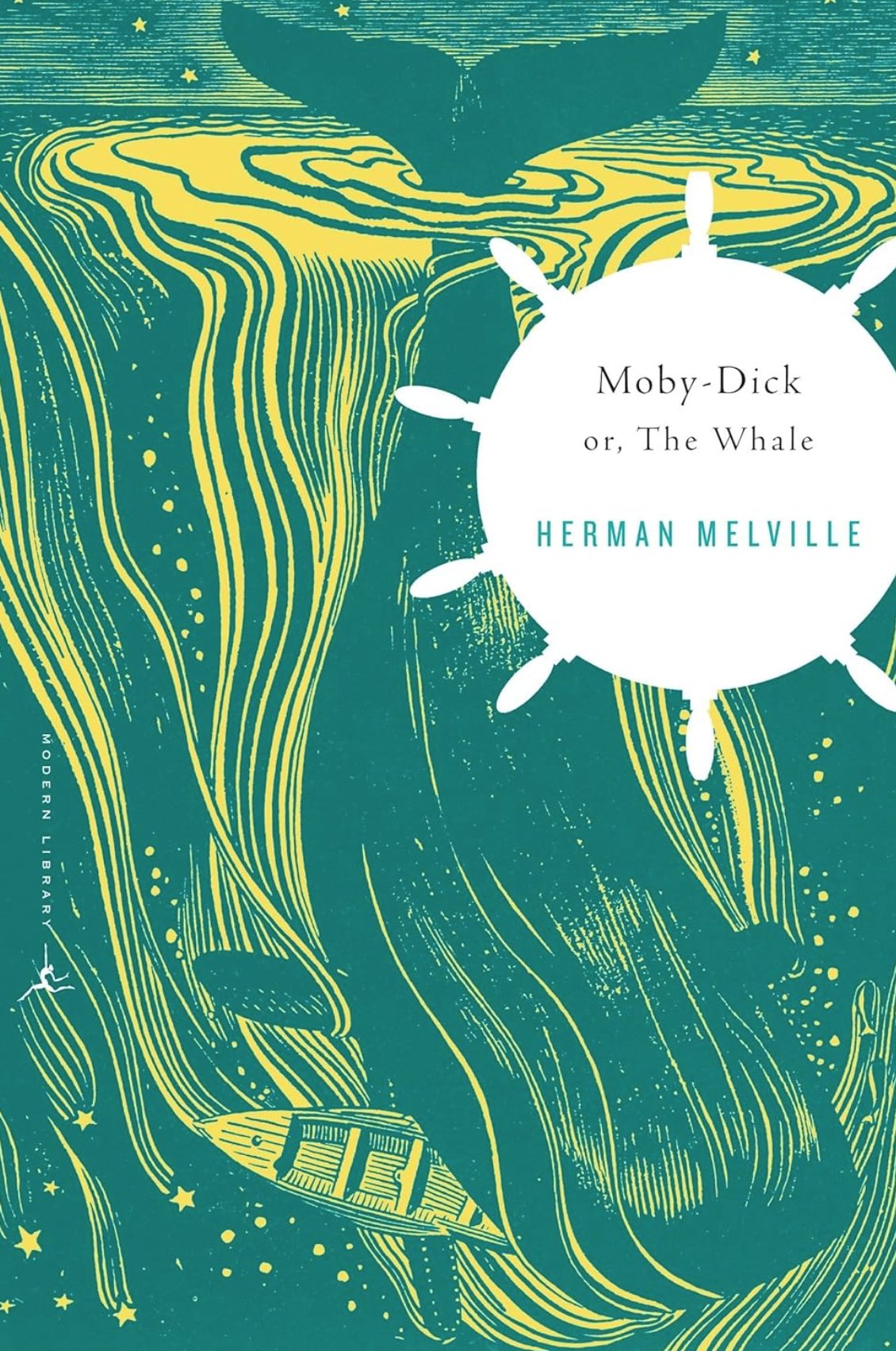
159 Herman Melville
Today, Herman Melville (1819-1891) is considered one of the greatest of American writers, and a leading candidate for THE American novelist thanks to his classic work, Moby-Dick. How did this unpromising student become one of the most inventive and observant writers of his time? What obstacles did he face, and what did he do to overcome them? What other works of his are worth reading? Jacke, Mike, and special guest Cristina, aka The Classics Slacker, who recently spent 24 hours aboard the Charle...

158
Sept. 3, 2018
158 "The Things They Carried" by Tim O'Brien
In the 1960s and '70s, the Vietnam War dominated the hearts and minds of a generation of Americans. In 1990, the American writer Tim O'Brien, himself a former soldier, published "The Things They Carried," a short story that became an instant classic. Through its depiction of the members of a platoon in Vietnam, told largely through the tangible and intangible things in their possession as they humped their way through the jungle, O'Brien's story captures the soul and psyches of young men engaged...

157
Aug. 22, 2018
157 Travel Books (with Mike Palindrome)
"The world is a book," said Augustine, "and those who do not travel read only one page." But what about books ABOUT traveling? Do they double the pleasure? Transport us to a different place? Inspire and enchant? Or are they more like a forced march through someone else's interminable photo album? Mike Palindrome, President of the Literature Supporters Club, joins us for a look at his literary journey to London and Stockholm, summer reading, and a draft of the greatest travel books of all time. ...

156
Aug. 15, 2018
156 The Sonnet
“A sonnet,” said the poet Dante Gabriel Rossetti, “is a moment’s monument.” But who invented the sonnet? Who brought it to prominence? How has it changed over the years? And why does this form continue to be so compelling? In this episode of the History of Literature, we take a brief look at one of literature's most enduring forms, from its invention in a Sicilian court to the wordless sonnet and other innovative uses. Professor Bill walked us through a sonnet by Robert Hayden in Episode 97 -...

155
Aug. 9, 2018
155 Plato
“The safest general characterization of the European philosophical tradition,” said Alfred North Whitehead, “is that it consists of a series of footnotes to Plato.” We’ve all heard the name of Plato and his famous mentor Socrates, and most of us have encountered the dialogues, a literary-philosophical form he essentially invented. We know the themes he advanced, his general views of metaphysics, and his interest in knowledge and its importance as a virtue. But what do we know about Plato the man...

154
Aug. 1, 2018
154 John Milton
John Milton (1608 - 1674) was a revolutionary, a republican, an iconoclast, a reformer, and a brilliant polemicist, who fearlessly took on both church and king. And he ranks among the greatest poets of all time, a peer of Shakespeare and Homer. Philip Pullman, the author who named his trilogy (His Dark Materials) after a Miltonic phrase, said, “No one, not even Shakespeare, surpasses him in his command of the sound, the music, the weight and taste and texture of English words.” In this episode o...

153
July 25, 2018
153 Charles Dickens
Charles John Huffam Dickens (1812-1870) was the greatest novelist of the Victorian age. In his 58 years he went from a hardscrabble childhood to a world-famous author, beloved and admired for his unforgettable characters, his powers of observation and empathy, and his championing of the lower classes. He wrote 15 novels, five novellas, hundreds of articles and short stories - and also found time to edit a weekly periodical for over 20 years. But that wasn't all: he also wrote thousands of pages ...

152
July 18, 2018
152 George Sand
George Sand wrote an astonishing number of novels and plays, and had friendships and affairs with an astonishing range of men and women. She dressed in men’s clothing, and she inspired a host of 19th century authors and artists, including Russian writers like Turgenev and Dostoevsky and British writers like Mary Ann Evans, who adopted the name George, as in George Eliot, out of tribute to her French predecessor. In this episode of the History of Literature, we travel to 19th Century France, for ...

151
July 11, 2018
151 Viking Poetry - The Voluspa (with Noah Tetzner)
The Vikings! Sure, they had helmets and hammers, but did they also have... poetry? Indeed they did! In this episode, we talk to Noah Tetzner, host of The History of Vikings Podcast, about the collection of Old Norse verses called the Poetic Edda - and in particular, we look at the first of these, the succinct poem known as The Völuspá. Dated to around 1250 A.D., the Völuspá recorded centuries of oral tradition. Today, it serves as one of our best introductions to Viking mythology, affording us a...

150
July 4, 2018
150 Chekhov's "The Lady with the Little Dog"
It's a deceptively simple story: a man and a woman meet, have an affair, are separated, and reunite. And yet, in writing about Anton Chekhov's story, "The Lady with the Little Dog" (1899), Vladimir Nabokov said, "All the traditional rules have been broken in this wonderful short story.... No problem, no regular climax, no point at the end. And it is one of the greatest stories ever written." What makes this story so good? How does it hold up today? In this episode, Jacke and Mike examine the ...

149
June 27, 2018
149 Raising Readers (aka The Power of Literature in an Imperfect World)
Jacke and Mike respond to an email from a listener who is about to become a father and wondering about the role of literature in the life of a young child. Works and authors discussed include J.K. Rowling, Phillip Pullman, Andrew Motion, Dr. Seuss, Sandra Boynton, The Great Brain series, Bedtime for Frances, Frog and Toad, Beatrix Potter, Martin Amis, James Mill, John Stuart Mill, The Beatles, Judy Blume, Roald Dahl, the Moomintroll books, Nick Hornby. Help support the show at patreon.com/...

148
June 20, 2018
148 Great Literary Hoaxes
What can we count on? What do we know is true? In this episode, host Jacke Wilson takes a look at a motley crew of inventive liars who set out to fool the literary world - and often did, at least for a while. From the ancient pseudo-Sappho to the escapee from a debauched convent, from the treasure trove of Shakespeare's lost works to the balloon fraud of Edgar Allan Poe, writers have been generating bogus works for centuries - and an gullible public has gobbled them up and come back for more. ...

147
June 13, 2018
147 Leo Tolstoy
When asked to name the three greatest novels ever written, William Faulkner replied, “Anna Karenina, Anna Karenina, Anna Karenina.” Nabokov said, “When you are reading Turgenev, you know you are reading Turgenev. When you read Tolstoy, you are reading because you just cannot stop.” And finally, there's this compliment from author Isaac Babel: “If the world could write itself," he said, "it would write like Tolstoy.” But who was Leo Tolstoy? How did he become the person who could write War and...