
Episodes

667
Jan. 6, 2025
667 Sui Sin Far (with Victoria Namkung) | My Last Book with Samantha Rose Hill
Edith Maude Eaton (1865-1914) grew up in unusual circumstances: her father was an English merchant who traveled to China on business, and her mother was a formerly enslaved tightrope walker and human knife-throwing target who traveled all over the world with an acrobatic troupe. The eldest daughter among fourteen children, Eaton mostly grew up in Montreal, then relocated to America, where she became famous under the pen name Sui Sin Far. Today, her journalism and fiction, mostly chronicling the ...

666
Jan. 2, 2025
666 "Winter Dreams" by F. Scott Fitzgerald (with Mike Palindrome) | My Last Book with Lev Grossman
First published in December of 1922, "Winter Dreams" was one of the short stories known as the "Gatsby cluster," as F. Scott Fitzgerald worked out the characters, themes, and prose style that would later make his famous novel The Great Gatsby (1925) an American classic. Telling the story of Dexter Green, a Midwestern golf caddy who becomes a wealthy - but not wealthy enough - suitor to a rich young heiress Judy Jones, "Winter Dreams" works out some of Fitzgerald's own nostalgia and regret for hi...
![665 Keats's Great Odes (with Anahid Nersessian) [Ad-Free Encore Edition]](https://s3.us-west-1.amazonaws.com/redwood-labs/showpage/uploads/images/ad51d262-f2a6-493a-ab40-b652e9ab882b.png "665 Keats's Great Odes (with Anahid Nersessian) [Ad-Free Encore Edition]")
665
Dec. 30, 2024
665 Keats's Great Odes (with Anahid Nersessian) [Ad-Free Encore Edition]
In 1819, John Keats quit his job as an assistant surgeon, abandoned an epic poem he was writing, and focused his poetic energies on shorter works. What followed was one of the most fertile periods in the history of poetry, as in a few months' time Keats completed six masterpieces, including such celebrated classics as "To Autumn," "Ode to a Nightingale," and "Ode on a Grecian Urn." Now, two hundred years later, an American scholar has written an exciting new book called Keats's Odes: A Lover's D...
![664 James Joyce's "The Dead" Part 2 [Ad-Free Encore Version]](https://s3.us-west-1.amazonaws.com/redwood-labs/showpage/uploads/images/bc53cd98-aef7-402d-982f-587ddbdfb59e.png "664 James Joyce's \"The Dead\" Part 2 [Ad-Free Encore Version]")
664
Dec. 24, 2024
664 James Joyce's "The Dead" Part 2 [Ad-Free Encore Version]
Happy holidays! In this episode, presented without commercial interruption, Jacke revisits the second half of the classic James Joyce short story "The Dead." [This episode was originally released on December 22, 2017.] Additional listening: 368 The Story of the Nativity (with Stephen Mitchell) 172 Holiday Movies (with Brian Price) 407 "The Old Nurse's Story" by Elizabeth Gaskell Help support the show at patreon.com/literature or historyofliterature.com/donate. The History of Literatur...
![663 James Joyce's "The Dead" Part 1 [Ad-Free Encore Edition]](https://s3.us-west-1.amazonaws.com/redwood-labs/showpage/uploads/images/304ee350-9980-4cfb-84ce-9766ce0a0937.png "663 James Joyce's \"The Dead\" Part 1 [Ad-Free Encore Edition]")
663
Dec. 23, 2024
663 James Joyce's "The Dead" Part 1 [Ad-Free Encore Edition]
Happy holidays! In this episode, presented without commercial interruption, Jacke revisits the first part of the the classic James Joyce holiday story, "The Dead." [The full version of this episode was originally released on December 19, 2017.] Additional listening: 123 James Joyce's The Dead (Part 1) [Full Version] 72 The Best Christmas Stories in Literature 577 'Twas the Night Before Controversy - The Raging Dispute Over a Classic Christmas Poem 470 Two Christmas Days - A Holiday Sto...

662
Dec. 19, 2024
662 Monstrous Work and Radical Satisfaction - Black Women Writing Under Segregation (with Eve Dunbar) | My Last Book with Deni Kasa
Generally speaking, a common conception of U.S. race relations in the mid-twentieth century runs like this: segregation was racist and bad, the doctrine of "separate but equal" masked genuine inequality, and the racial integration brought about by the famous Supreme Court decision in Brown v. Board of Education was a long-awaited triumph. But is the story as neat as that? What did writers - and in particular Black women writers - think about segregation in the 1930s-1950s? Did they view racial i...

661
Dec. 16, 2024
661 James Baldwin (with Colm Tóibín)
Acclaimed Irish novelist Colm Tóibín first read James Baldwin just after turning eighteen. Inspired by the illumination and insight in Baldwin's Go Tell It on the Mountain, Tóibín would soon become a lifelong fan. In this episode, Tóibín tells Jacke about that original encounter, the qualities he most admires in Baldwin's work, Baldwin's spiritual relationship to the works of Henry James, and more. He also tells Jacke about his new book On James Baldwin, which the Sunday Independent calls "lucid...

660
Dec. 12, 2024
660 "Wakefield" by Nathaniel Hawthorne | My Last Book with Amelia Possanza
Before his marriage, before meeting Herman Melville, and before the publication of The Scarlet Letter, Nathaniel Hawthorne was living in near seclusion, writing the stories that formed his first collection Twice-Told Tales. Edgar Allan Poe was impressed: "His tone is singularly effective," he wrote, "wild, plaintive, thoughtful, and in full accordance with his themes...We look upon him as one of the few men of indisputable genius to whom our country has as yet given birth." In this episode, J...

659
Dec. 9, 2024
659 The Legend of King Arthur (with Lev Grossman)
A legendary king, knights of the round table, magic and myths and valiant quests - the stories of King Arthur (also known as the "Matter of Britain") have captivated readers since the Middle Ages. It's potentially rich material for a contemporary novelist, but as Lev Grossman found, some of the Arthurian world's lesser-known characters can be just as compelling. In this episode, the bestselling author of the Magicians Trilogy tells Jacke about his new take on an old legend in his novel The Brigh...

658
Dec. 5, 2024
658 "The Snow Fairy" by Claude McKay | Literary Journeys (with John McMurtrie)
After taking a look at a wintry poem by Harlem Renaissance poet Claude McKay, Jacke talks to editor John McMurtrie about his new book Literary Journeys Mapping Fictional Travels Across the World of Literature, which celebrates passages of literature that have sent readers to the ends of the earth from Ancient Greece to today. Additional listening: 157 Travel Books (with Mike Palindrome) 579 New Year New You! Conversations with Bethanne Patrick and Aislyn Greene 95 Runaway Poets: The Trium...

657
Dec. 2, 2024
657 Auden's England (with Nicholas Jenkins) | My Last Book with Gabriele Pedulla
From the beginning of his career as a poet, W.H. Auden wrestled with the meaning of Englishness. He came out with a collection of poems entitled On This Island, but what exactly was this island? A world in ruins? A beautiful (if morally compromised) haven? In this episode, Jacke talks to Nicholas Jenkins (The Island: War and Belonging in Auden's England) about Auden's relationship with the land of his birth, including his preoccupations with the vicissitudes of war, the trials of love, and the p...
![656 Novelist Chigozie Obioma on Literature, Life, and His Love for Kazuo Ishiguro's Remains of the Day [HOL Encore]](https://s3.us-west-1.amazonaws.com/redwood-labs/showpage/uploads/images/5e2c00d5-3650-4f95-b1d8-4fa38ee7b44d.png "656 Novelist Chigozie Obioma on Literature, Life, and His Love for Kazuo Ishiguro's Remains of the Day [HOL Encore]")
656
Nov. 29, 2024
656 Novelist Chigozie Obioma on Literature, Life, and His Love for Kazuo Ishiguro's Remains of the Day [HOL Encore]
By listener request, Jacke presents a conversation with Nigerian-born novelist Chigozie Obioma (The Road to the Country, The Fishermen, An Orchestra of Minorities). Obioma, hailed by the New York Times as "the heir to Chinua Achebe," tells Jacke about his childhood in Nigeria, the moment he knew he wanted to be a storyteller, what he values in literature, and more. Special attention is paid to one of Obioma's favorite books, The Remains of the Day by Kazuo Ishiguro. [This is an HOL Encore per...

655
Nov. 27, 2024
655 Guilty Pleasures (with Mike Palindrome and Laurie Frankel) | My Last Book with Mary Flannery
Guilty pleasures! We use the phrase all the time, but what does it really mean? Can reading a book ever be a guilty pleasure? A listener suggests that it can - and Jacke invites two frequent History of Literature guests to test the theory. For this day-before-Thanksgiving special treat, Laurie Frankel (This Is How It Always Is, Family Family) and Mike Palindrome, the President of the Literature Supporters Club, help Jacke find some guilty pleasures, in literature and life. PLUS Jacke gives his o...

654
Nov. 25, 2024
654 Loving (and Reclaiming) Sylvia Plath (with Emily Van Duyne)
Troubled patron saint of confessional poetry? Quintessential literary sad girl? Genius poet rightfully viewed as the heir to Emily Dickinson? In her tragically brief life, Sylvia Plath (1932-1963) somehow managed to inspire all of these images and more. In this episode, Jacke talks to Emily Van Duyne about her book Loving Sylvia Plath: A Reclamation, which delivers a nuanced, passionate exploration of the life and work of one of the most misunderstood writers of the twentieth century. Additio...

653
Nov. 21, 2024
653 J.D. Salinger
He's best known as the author of The Catcher in the Rye, one of the great publishing and cultural successes of the twentieth century. But there was more to the Jerome David Salinger (1919-2010) story than a single book. In this episode, Jacke takes a look at Salinger's childhood and education, his youthful romance thwarted by an unlikely turn of events, his war and postwar experiences as a soldier and special intelligence investigator, his flurry of almost unbelievable success as a writer, and h...

668
Nov. 18, 2024
652 Writing a Comic Novel (with Charles Baxter) | My Last Book with Bill Eville
Jacke talks to award-winning novelist and short story writer Charles Baxter about his new book, Blood Test: A Comedy, which the New York Times says "provides a snapshot of a troubled America, disguised as a speculative comedy...a quiet masterpiece." PLUS Bill Eville (Washed Ashore: Family, Fatherhood, and Finding Home on Martha's Vineyard) stops by to discuss his choice for the last book he will ever read. Additional listening: 63 Chekhov, Bellow, Wright, and Fox (with Charles Baxter) 612...

651
Nov. 14, 2024
651 Joseph Campbell and the Hero's Journey | The Heroine's Labyrinth (with Douglas Burton) | My Last Book with Douglas Burton
In 1949, Joseph Campbell's Hero with a Thousand Faces posited the existence of a "monomyth," a universal pattern that formed the basis of heroic tales in every culture. But although he maintained that more often than not the young heroes followed an archetypal journey--which in addition to ancient myths can be seen in everything from Star Wars to Harry Potter--Campbell acknowledged that heroines seemed to have a different story arc, but not one that he had taxonomies. In other words, female hero...

650
Nov. 11, 2024
650 Dante's Divine Comedy (with Joseph Luzzi)
Written in the early 1300s, Dante Alighieri's Divine Comedy has been an essential component of Western literature for more than 700 years. In this episode, Jacke talks to Joseph Luzzi about his book, Dante's Divine Comedy: A Biography, which gives an intimate portrait of the work that has challenged and inspired generations of readers. Additional listening: 131 Dante in Love (with Professor Ellen Nerenberg and Anthony Valerie) 589 Dante and Friendship (with Elizabeth Coggeshall) 327 Natal...

Nov. 7, 2024
649 Mind and Media in the Enlightenment (with Collin Jennings) | Mike Recommends A Moveable Feast by Ernest Hemingway | My Last Book with David L. Cooper
It's a Literary Feast Day at the History of Literature Podcast! First, Jacke talks to old friend Mike Palindrome about his love for A Moveable Feast, Hemingway's late-in-life recollection of his salad days (Pernod days?) in Paris. Then Collin Jennings (Enlightenment Links: Theories of Mind and Media in Eighteenth-Century Britain) explains how his application of computational methods to eighteenth-century fiction, history, and poetry shed new light on the Enlightenment - and what it means for rea...

648
Nov. 4, 2024
648 Hemingway's For Whom the Bell Tolls (with Alex Vernon) | My Last Book with Sandra Spanier
Throughout the 1930s, Ernest Hemingway was in the public eye as a journalist, short story writer, activist, and one of the most famous writers on the planet. But his 1937 novel To Have and Have Not fell flat, and critics wondered if the Hemingway who could write a novel on the level of The Sun Also Rises (1926) or A Farewell to Arms (1929) still existed. All that changed with the publication in 1940 of For Whom the Bell Tolls. Widely read and widely acclaimed, the story of the idealist Rob...
![647 The Brontes [HOL Encore]](https://s3.us-west-1.amazonaws.com/redwood-labs/showpage/uploads/images/706bf170-c46a-40dd-b60c-84d614f47ad1.png "647 The Brontes [HOL Encore]")
647
Oct. 31, 2024
647 The Brontes [HOL Encore]
Although their lives were filled with darkness and death, their love for stories and ideas led them into the bright realms of creative genius. They were the Brontes - Charlotte, Emily, and Anne - who lived with their brother Branwell in an unassuming 19th-century Yorkshire town called Haworth. Their house, a parsonage, sat on a hill, with the enticing but sometimes dangerous moors above and a cemetery, their father’s church, and the industrializing town below. It was a dark little home, with lit...

646
Oct. 28, 2024
646 Discovering a Long Lost Slave Narrative (with Jonathan D.S. Schroeder)
When he undertook his research on Harriet Jacobs and her brother John Swanson Jacobs, scholar Jonathan D.S. Schroeder wasn't expecting to find John's long lost autobiography. But there it was, buried in the archives of an Australian newspaper. Unknown for one hundred and sixty-nine years, the narrative bursts with fire and fury, filled with the energy (and intellectual freedom) of an ex-slave and ex-American writing from outside the United States. In this episode, Jacke talks to Jonathan about w...
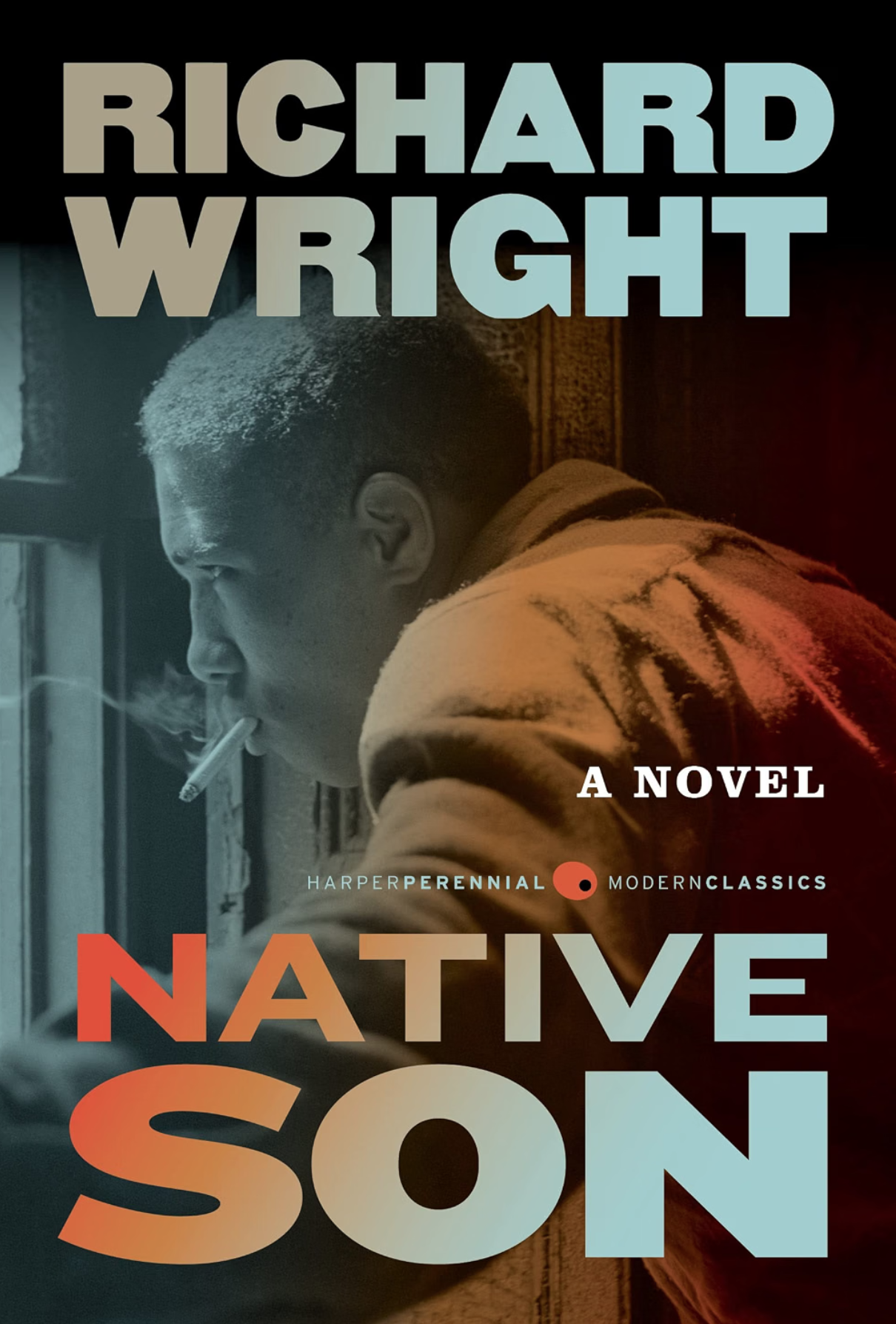
645
Oct. 24, 2024
645 Richard Wright
"Wright was one of those people," said poet Amiri Baraka, "who made me conscious of the need to struggle." In this episode, Jacke takes a look at the life and works of Black American novelist and poet Richard Wright (1908-1960), author of Uncle Tom's Children, Native Son, Black Boy, and thousands of haiku. Born in Mississippi in desperate poverty to a schoolteacher mother and a sharecropper father (who were themselves the free children of formerly enslaved peoples), Wright had little formal e...

644
Oct. 21, 2024
644 Jack Kerouac (with Steven Belletto)
Critics didn't know quite what to make of twentieth-century American novelist and poet Jack Kerouac (1922-1969), but readers had less difficulty. In spite of mixed reviews, On the Road (1957) quickly became a kind of bible for anyone hoping to squeeze more out of life. In this episode, Jacke talks to Steven Belletto, editor of The Cambridge Companion to Jack Kerouac, about the continuing fascination with the Beat Generation and its most famous avatar. Additional listening: 339 Jack Ker...